Retaining the exterior changes of this model, in 1962 Fiat introduced the 3rd generation 1100, called the 1100D. “D” stood for Delight. It was a sober yet comfortable 4-door sedan, very similar to the Granluce but with simpler sides and a new simpler rectangular mouth. The 1100D was a successful Italian Standard in the early sixties and along with its own Estate or Family car version and a Deluxe Model that offered a higher performance with 50 hp, extra side mouldings, front bench seat with two reclining backs and carpet floor mats. These survived without any substantial alteration until 1966, when the introduction of the groundbreaking 124 model imposed a further change in styling.
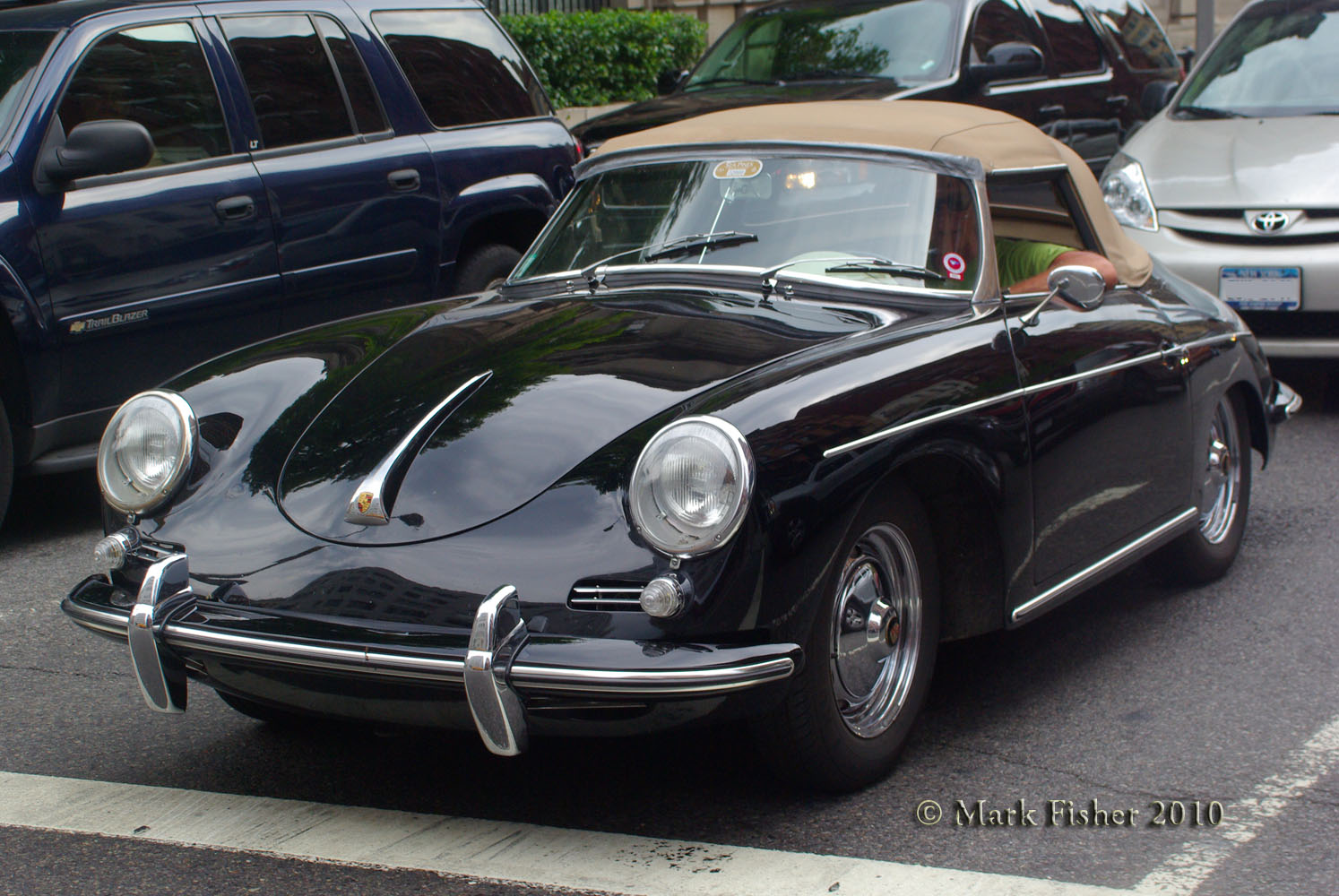
The Porsche 356 was the company’s first production automobile. It was a lightweight and nimble handling rear-engine rear-wheel-drive 2 door sports car available in hardtop and convertible configurations. Design innovations continued during the years of manufacture, contributing to its motorsports success and popularity.
The 356 was created by Ferdinand “Ferry” Porsche (son of Dr. Ing. Ferdinand Porsche, founder of the company). Like its cousin, the Volkswagen Beetle (which Ferdinand Porsche Senior had designed), the 356 was a four-cylinder, air-cooled, rear-engine, rear-wheel-drive car utilizing unitized pan and body construction. While the 356’s body was an original design by Porsche employee Erwin Komenda, its mechanicals (including engine, suspension and chassis) were derived from the Volkswagen. The first 356, was roadcertified in Austria on June 8, 1948, and used many Volkswagen parts for manufacturing economy. Porsche quickly re-engineered and refined the car with a focus on performance. By the late ’50s many fewer parts were shared in common between Volkswagen and Porsche. The early 356 automobile bodies produced at Gmünd, Austria were handcrafted in aluminum, but when production moved to Zuffenhausen, Germany in 1950, models produced there were steel-bodied.
Little noticed at its inception, the first 356s sold primarily in Austria and Germany. From the first prototype in 1948, it took Porsche about two years to manufacture the first 50 automobiles. By the early 1950s the 356 had gained some renown among enthusiasts on both sides of the Atlantic for its aerodynamics, handling, and excellent build quality. It was common for owners to race the car as well as drive it on the street. Increasing success with its racing and road cars brought Porsche orders for over 10,000 units in 1964, and when 356 production ended in 1965 approximately 76,000 had been produced.





 Don't Blink, You Will Miss It!